

 Downloadable Brochures in PDF Format
Paul Lembo, Managing Director of New Era Converting Machinery, shares the realities shaping the converting industry, and discusses how to stay competitive in a rapidly shifting market. From tariffs and supply chain strain to battery market slowdowns, sustainability demands, and increasingly complex contract negotiations — small to mid-sized companies in packaging and converting face unprecedented challenges. For the video, please click here:
Q For background, can you share New Era’s story with our readers?
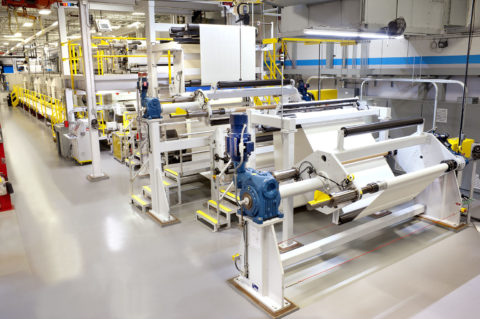
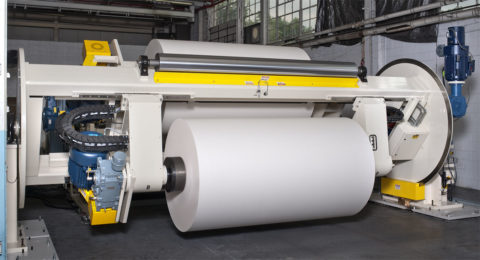
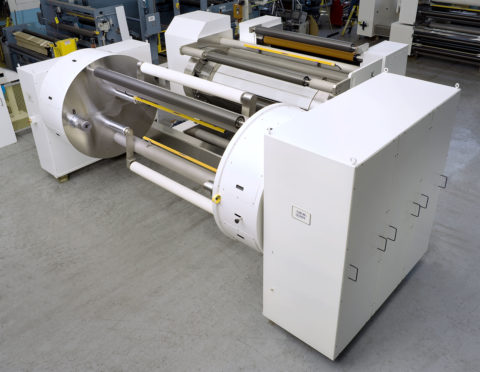
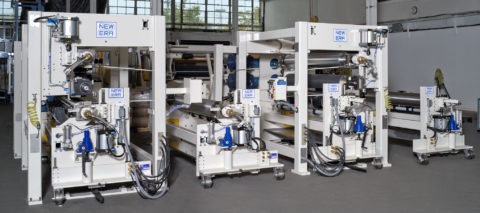
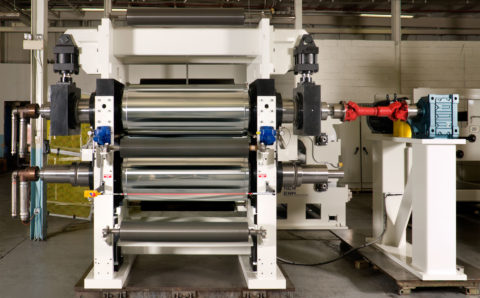
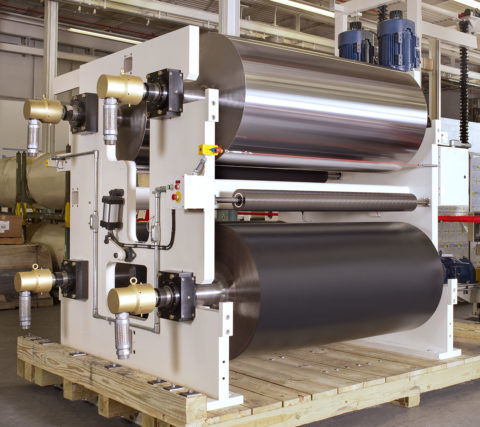
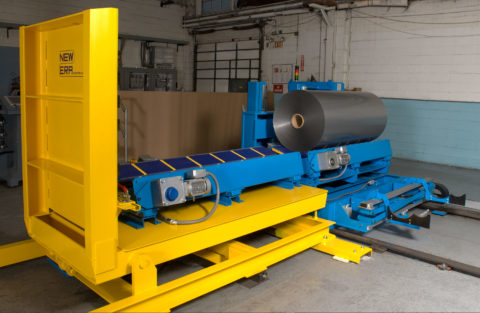
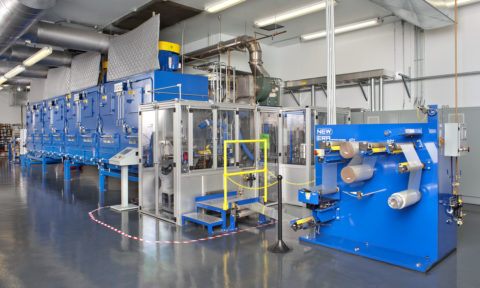
New Era was founded over 30 years ago in Patterson, New Jersey. We’re a custom builder of converting machinery systems for materials handled in roll-to-roll or roll-to-sheet format, including turnkey installations of coating, laminating, embossing, and calendaring systems, including their controls. In April 2025, New Era was acquired by IPCO, a Swedish-based manufacturing company specializing in steel belts and processing systems like pastillation, belted laminators, film casting equipment, and scattering equipment.
Q In terms of the converting industry right now, what is weighing most heavily on your industry and your customers?
Market uncertainty is making manufacturers more cautious, slowing investment and hiring, while complicating demand forecasting and supply chain stability. Factors including trade policies, geopolitical conflicts, interest rates, energy costs, and variety of others, are making it challenging for companies to plan large capital investments.
Q How is the slowing of the battery market impacting your business?
Battery investment hasn’t collapsed, but weaker demand and policy uncertainty have cooled momentum. We’ve seen more cancellations and project delays in the battery sector over the past three to five years than across all industries combined in our 30-plus year history. IRA complexity, industry consolidation, and U.S. EV market softening all contribute to this. However, some large, well-capitalized plants with strong off-take agreements are still moving forward, suggesting a positive outlook moving forward, things have just cooled temporarily.
Q How are smaller companies coping with tariffs and trade negotiations?
It’s certainly a challenge. Whether you manufacture outside the U.S. or source large subsystems from overseas, the costs of goods sold have increased. Many smaller component parts originate overseas, and we’re still realizing the impact of tariffs filtering down from supply chain manufacturers who had attempted to absorb these costs, but no longer can afford to do so. The biggest challenge for custom machine builders like us is that we quote fixed-price bids with long lead times. That combination is dangerous when your cost base changes rapidly during the manufacturing cycle. You can attempt to address cost increases in contracts, but for many smaller components, tariffs are paid at different stages in the supply chain, making it difficult to determine the true impact.
Q What other factors are creating complexity in contract negotiations?
Contract negotiations in general have grown more complex over the past five to 10 years. Common additions include items related to IT security, data protection, more stringent indemnification, liquidated damage clauses, performance specifications, codes of conduct, and sustainability guidelines. These are lengthy documents which are expensive to review, and each client has their own guidelines that change rapidly. All these items must be negotiated after months of work trying to win a project on the technical side, which can be exhausting.
Q How are companies meeting sustainability demands?
Small companies are meeting sustainability demands by making low-cost, practical changes like improving energy efficiency, reducing waste and packaging, and sourcing more responsibly. Mid-sized businesses are beginning to use digital tools to track resource use while leveraging grants and embedding green practices into their culture. These steps help cut costs, meet regulations, and strengthen competitiveness without major capital investments.
Q How can smaller players carve out a competitive edge?
We’ve always leaned heavily on what we feel is one of our biggest strengths, which is our ability to adapt to our clients’ needs. In the custom machinery world, clients require the ability to make changes on the fly, and not have designs pushed on them. They need a supplier that listens and can provide exactly what they want, or make suggestions related to design or process where needed. That’s what we’ve always felt was vital to our success.
Q Which challenges or opportunities could reshape this industry?
As far as challenges, I can see contracts continuing to get more complex, which will strain small to mid-sized businesses that don’t have the legal departments or budgets to negotiate multiple projects at a time. On the brighter side, I think there’ll be some really intriguing developments related to technology and AI in the converting equipment field over the coming years. Everything from predictive maintenance, uptime improvements, and waste reduction will be impacted by AI, and I’m excited to see what tomorrow brings.